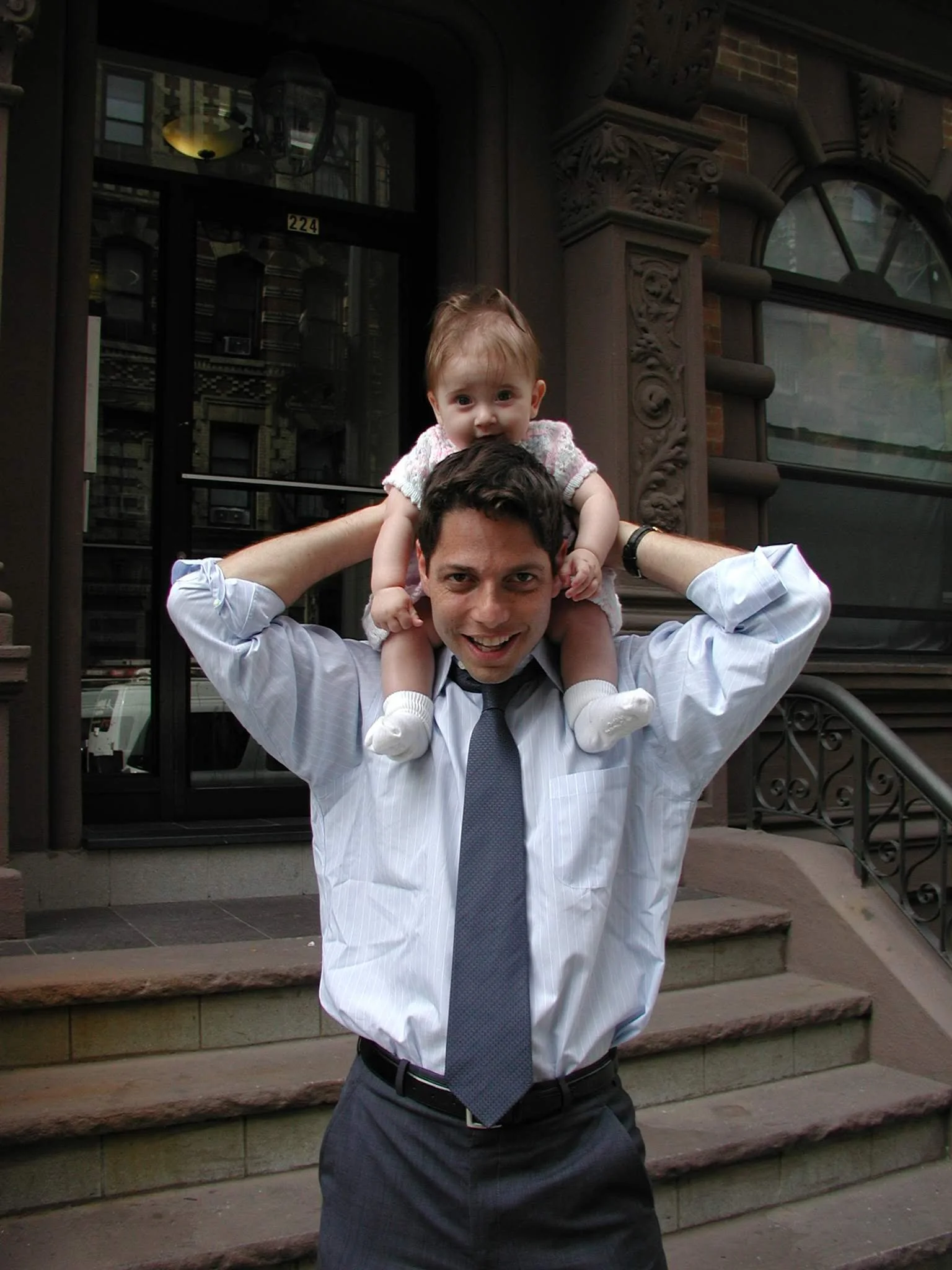
What Do You Want To Be When You Grow Up?
“A dancer-singer-actress-mermaid-hairdresser-makeup artist-writer-princess” was just one of the answers I would have given in my elementary-aged years.
We have all been asked what we want to be when we grow up at various stages in our lives, whether at school or by family members. Some of these adults may have also had suggestions, like, “She’ll make a great lawyer…” as you fervently debated against a rule or restriction. Maybe some adults asked excitedly, “Are you going to be a doctor like your parents?” Others may have inferred that “you must not want to be a doctor like your parents…” That one is true; I don’t want to be a doctor like my parents, but maybe I’d like to have a PhD in something, and maybe I’d still make a great lawyer.
But as I anticipate graduating this May, I still feel that my first-grade answer suits me best. When adults asked us what we wanted to be when we grew up, “grow up” seemed more like a sudden milestone of adulthood, when in reality, we do not grow up the instant we are handed our diplomas.
“Grow up,” structurally, consists of grow, a verb that signifies an ongoing process, and up, a directional particle whose meaning only exists in contrast to down. Grow implies duration. It cannot happen instantaneously. It suggests accumulation, expansion, and transformation over time. We grow plants, relationships, skills, and understanding. Even biologically, growth occurs in increments, often invisibly, before suddenly becoming noticeable.
Up, meanwhile, is relational and, in a sense, infinite. The phrase contains no embedded endpoint. There is no linguistic marker that signals completion. It has no natural boundary. Even in physical space, there is no final point at which “up” ends. Up is not an anchor on which we hang our rope, but the direction in which we climb; an orientation rather than a destination, a vector extending indefinitely away from a point of origin.
Somewhere along the way, the adult question shifts from “What do you want to be?” to “What jobs are you going to get?” Somehow, we have to fit “Dancer-singer-actress-memaid-hairdresser-makeup artist-writer-princess” into titles like “Assistant (blank)” and “Associate (blank).”
We are rarely only one thing. Even people with clearly defined professions carry multiple identities at once: caregiver, artist, friend, thinker, learner, chef, storyteller. The child who wanted to be everything was not wrong; she just did not yet know the adult language for multiplicity.
As I move toward graduation, I feel less like I am choosing one path and more like I am learning how to keep choosing. The skills I have developed, the interests that have persisted, and even the ones that have surprised me all coexist. Writing, creating, analyzing, collaborating, imagining. None cancels out the others.
Maybe growing up is not about becoming one thing. Maybe it is about gaining the freedom and confidence to become many things over time, and to allow those identities to evolve without panic. The pressure to decide forever at twenty-one is, in some ways, a misunderstanding of what a life actually is.
If someone asked me today what I want to be when I grow up, my answer would probably still be a list. I am still growing. And hopefully, I always will be.
Xoxo,
Natalie M. Shaw
Digital Platform Director